AN INVENTIVE LIFE
I've been an inventor since childhood.
Creating something new has always been a natural expression of my curiosity.
Often, an idea begins with recognizing an unmet need, observing something that could work differently, or imagining a possibility that has yet to be explored.
I love the process that follows—the questions, the sketches, the engineering, the prototypes, the unexpected challenges, and the moment when something imagined begins to take physical form.
It is a fascination that has stayed with me throughout my life.
Where It Began
After studying at Michigan State University and earning my medical degree from Wayne State University School of Medicine, I stayed home to raise my family and began pursuing my inventions professionally.
During those early years, I explored ideas, developed prototypes, and entered the world of intellectual property. My first experiences with patent development opened an entirely new understanding of what might be possible.
Those inventions eventually led me into the beauty industry, where I spent the over two decades as an executive, entrepreneur, and inventor.
IMX Cosmetics | Making Personalization Possible
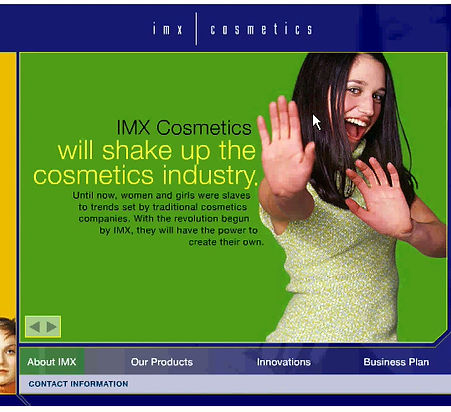
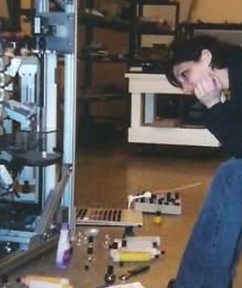
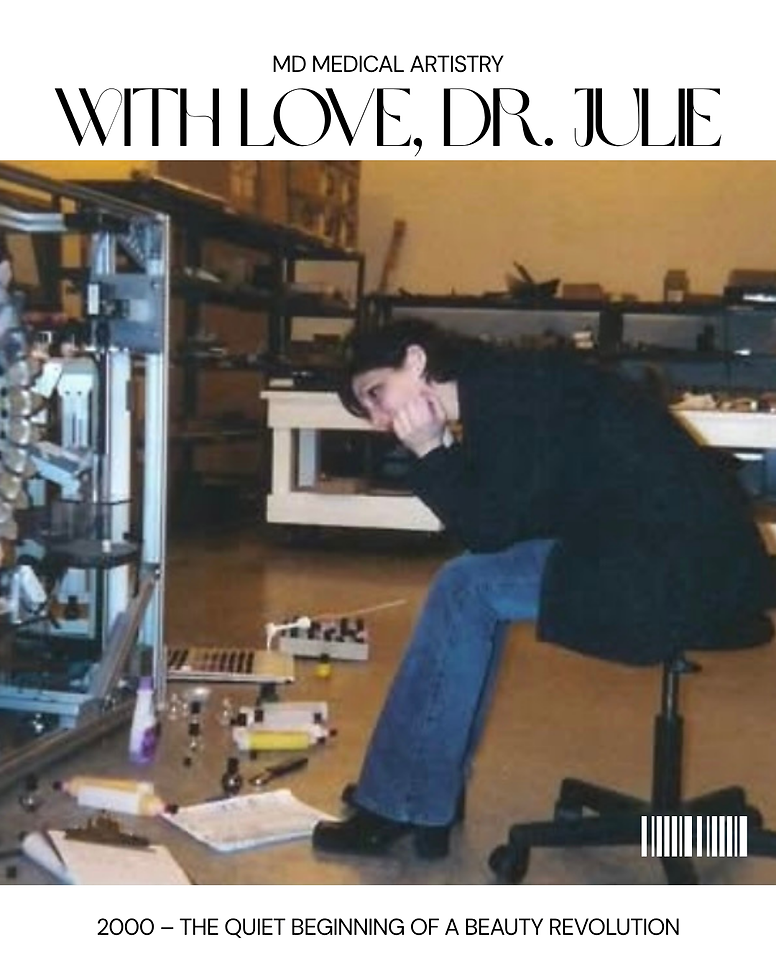
In 2000, I founded IMX Cosmetics with a vision for creating beauty products customized to the individual.
I imagined a different kind of beauty experience, one where customers could participate in creating their own products while exploring the possibilities of art, science, and technology.
At a time when most cosmetics were manufactured in predetermined shades and formulations, we were developing systems that could translate individual preferences, color information, and personal selections into customized products created on demand.
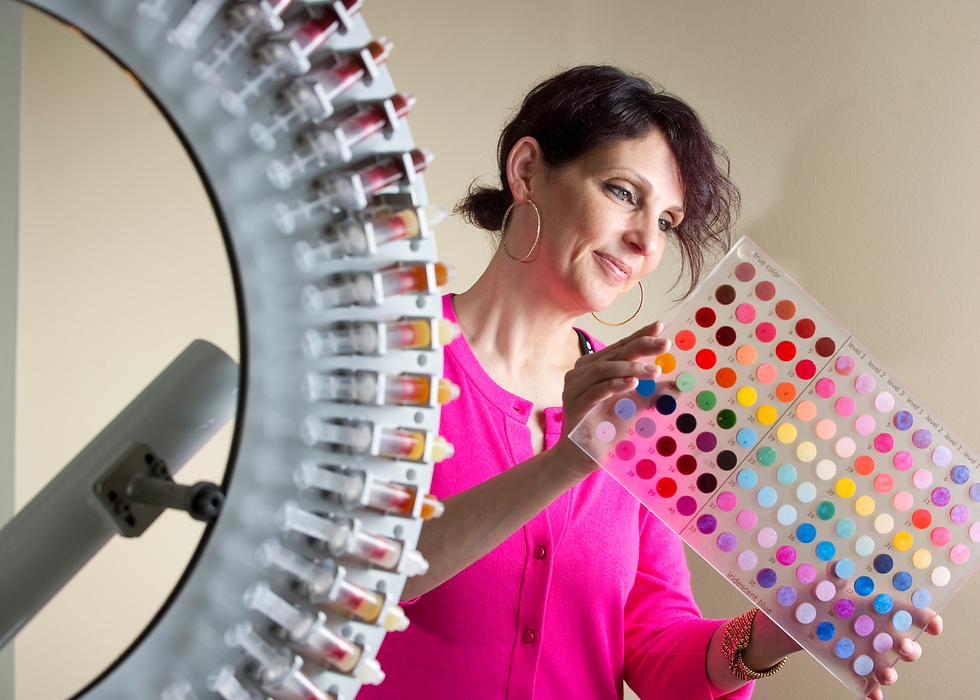
Our work brought together color science, early artificial intelligence-driven formulation, color matching, software, mechanical engineering, precision dispensing, automated mixing, and interactive computer interfaces.
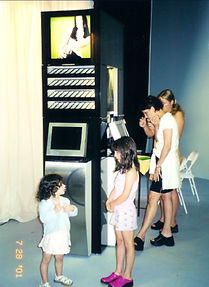
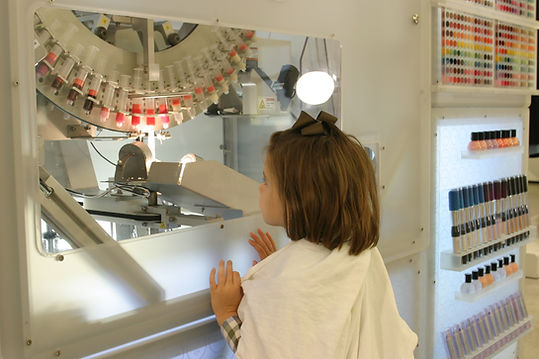
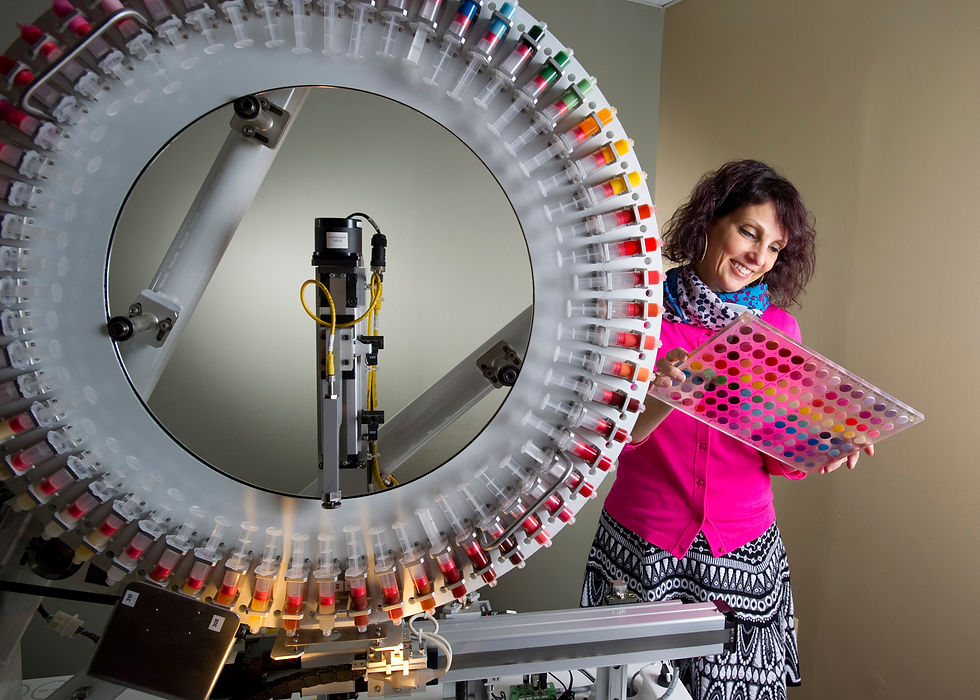
The resulting technologies became physical Mixing Stations™ capable of producing individualized cosmetic formulations.
In the early 2000s, inviting a customer to touch a computer screen and begin creating something personal was still an unusual retail experience.
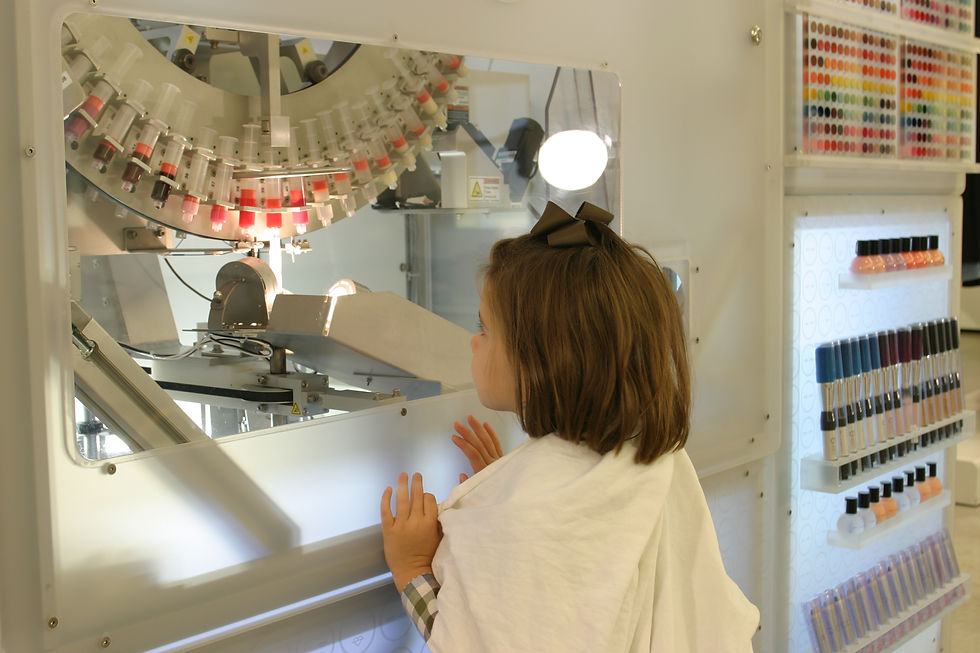
Our Mixing Stations™ encouraged customers to explore colors, finishes, and other creative possibilities, with their selections translated into formulations prepared before their eyes.
We also developed the MX Stick™, an RFID-enabled approach to connected personalization that allowed customer identification and stored preferences to become part of an ongoing, individualized experience.
Beyond the technology itself, I cared deeply about the messages we shared with girls and women.
We featured girls from our local community as our models, and our Mixing Station computer screensaver displayed affirmations including “I am strong,” “I am unique and exciting,” and “I am resourceful.”
I wanted young girls to embrace art and science, to feel confident exploring their creativity, and to recognize the possibilities within themselves.
We introduced our Mixing Stations™ into luxury retail environments, including Nordstrom, Fred Segal, and Barneys New York, where customers could experience personalized cosmetic creation firsthand.
These early installations were an exciting realization of years of invention and engineering. They brought together the technology, the creative process, and the experience of making something uniquely personal.
Over the years, my work continued to expand into related technologies for nail color selection, foundation and body-powder formulation, point-of-sale dispensing, robotics, connected personalization, automated cosmetic sampling, and industrial product design.
Looking back, I am especially grateful that these early inventions allowed me to explore so many different dimensions of creativity, technology, and human experience.
An International Body of Intellectual Property
My inventions have contributed to more than 120 patent filings and over 90 patents granted worldwide, including utility and design patents across multiple jurisdictions.
My work has received recognition for patent innovation, including a cover feature in Crain's Detroit Business, and has created opportunities to speak about engineering, invention, and emerging technologies.
The patent portfolio reflects years of developing interconnected ideas—from the mechanics of precise dispensing to the software and interfaces that translate individual needs into physical outcomes.
I have always been interested in understanding the entire system.
How information is captured. How a decision is made. How materials are selected and measured. How a product is created. And how the person interacting with that technology experiences the result.
The Reach Beyond Beauty
One of the most meaningful discoveries in revisiting my earlier work has been learning how widely those inventions have been referenced in subsequent patent literature.
Patent records identify later inventions associated with global companies including L'Oréal, Coca-Cola, Procter & Gamble, Shiseido, Sephora, and others that cite earlier IMX technologies.
Those references extend across personalized cosmetics, automotive paint preparation, industrial fluid dispensing, pharmaceutical compounding, laboratory instrumentation, food and beverage customization, and retail automation.
What began with questions about individualized cosmetic products addressed technical problems that also arise in many other industries.
The breadth of that record has given me a new appreciation for the engineering work behind those early inventions and the many directions in which related technologies have continued to develop.
A Curiosity That Continued to Expand
My inventive interests have never been limited to a single industry.
Over the years, I explored new digital concepts and consumer experiences through Awake by Design, and developed additional technologies in collaboration with other companies.
These included a hair-dryer device incorporating the delivery of hair-care compositions, with patent-application rights subsequently assigned to Aquis, as well as dispensing-component and magnetic-mixing inventions developed for RPG|IMX.
Another important chapter was my work on an automated system for delivering hygienic, personalized cosmetic samples. That invention received patent grants in several countries after its initial international filing.
During the pandemic, I developed BioWrap, an exploration of portable environmental structures, protective materials, filtration, sensing, and responsive technologies for shared spaces.
Each project began with a different question and introduced new materials, engineering considerations, or human needs to explore.
And each reminded me how much I enjoy inventing.
Education, Community & Human Experience
Alongside my technology career, I have found tremendous fulfillment in sharing my experiences with students and young people, particularly young women interested in engineering, STEAM, entrepreneurship, and invention.
I have enjoyed speaking about creative problem-solving, encouraging curiosity, and helping others recognize their own capacity to imagine and develop something new.
During the pandemic, my work also expanded into mindfulness education and mental wellness advocacy, including the development of a hospital-supported mindfulness program for students and educators in a rural school community.
These experiences deepened my appreciation for the relationships between technology, creativity, education, and human well-being.
New Questions, New Possibilities
In 2024, I expanded into restorative tattoo artistry, pursuing specialized training in hyperrealistic nipple-areola restoration and scar refinement and camouflage.
Working directly with the skin, and with individuals navigating physical changes after surgery or medical treatment, has introduced an entirely new landscape of questions.
My medical education, engineering experience, and restorative artistry now inform my exploration of technologies intended to support individualized restorative care and the practitioners who provide it.
I continue to develop independent inventions, explore mechanical and digital systems, and create early prototypes. Depending on the technology and opportunity, I am interested in licensing, intellectual-property acquisition, collaborative development, and strategic partnerships.
Still Inventing
When I look across the years, I see many different industries, technologies, collaborations, and experiences.
Yet the curiosity that began in childhood remains.
I still love imagining something that doesn't exist. I love working through a difficult engineering problem, exploring materials, developing mechanisms, and discovering new possibilities through experimentation.
Inventing has brought me extraordinary joy throughout my life.
And perhaps one of the most exciting things about this chapter is having the freedom to follow that curiosity wherever it may lead.
There is still so much I would love to create.





From
Personalized Cosmetics to a Global Record of Technical Citations
Some of the most interesting discoveries in invention happen years after an original idea is developed.
When I founded IMX Cosmetics in 2000, I was interested in creating technologies that could produce truly individualized cosmetic products.
Doing so required more than identifying a person's preferred color.
It required developing systems capable of translating information into individualized formulations, selecting and measuring liquid and powder ingredients, controlling precision dispensing mechanisms, and producing customized products consistently and efficiently.
These were engineering challenges involving software, color science, fluid and powder handling, mechanical systems, and automated production.
The early inventions encompassed customized nail-color selection, point-of-sale body-powder formulation, and automated cosmetic dispensing, bringing together digital personalization and the physical preparation of individualized products.
Over the following decades, published IMX inventions appeared in the patent records of subsequent technologies across a remarkable range of industries, including beauty, pharmaceuticals, healthcare, food and nutrition, automotive refinishing, laboratory instrumentation, and advanced manufacturing.
Today, these references provide a documented history of the breadth of technical fields in which those early inventions continued to appear, extending far beyond personalized beauty.
The Original Technologies
The IMX patent portfolio encompassed interconnected inventions addressing personalized color selection, formulation, precision dispensing, digital interfaces, automated production, and individualized consumer experiences.
These technologies developed through successive generations of engineering, from early nail-color selection and point-of-sale dispensing systems to robotic product preparation and automated cosmetic sampling.
1. Nail Color Selection and
Customized Formulation
Early inventions addressed computer-assisted selection and production of individualized nail colors, including systems for translating a customer's preferred color and effects into customized formulations.
The technologies incorporated interactive selection, stored formulation information, and controlled dispensing of ingredients in predetermined proportions.
Representative patents: US 6,622,064 — Nail Polish Selection Method (2003), and US 8,880,218 — Nail Polish Color Selection System (2014).
2. Personalized Body-Powder Formulation & Dispensing
Early IMX inventions also addressed the individualized selection, formulation, and dispensing of cosmetic powders.
The patented systems included multiple ingredient chambers, controlled metering mechanisms, computerized formulation guidance, and options for customizing color, finish, and other cosmetic effects.
The broader disclosures also contemplated digital color visualization, measured color matching, and functional additives, bringing together information processing and precision powder handling within a personalized product experience.
Representative patents: US 6,412,658 (2002), US 6,779,686 (2004), US 7,121,429 (2006), and US 8,636,173 (2014).
This invention family subsequently appeared in patent references involving cosmetic formulation, nutritional dispensing, pharmaceutical preparation, precision material handling, and other technologies.
3. Automated Cosmetic Dispensing
A substantial body of work addressed the storage, selection, measurement, and precision dispensing of multiple formulation components.
These inventions explored mechanical dispensing arrangements, computer-controlled operations, ingredient handling, and the preparation of customized cosmetic products.
Representative patents: US 6,615,881 (2003), US 6,672,341 (2004), and related international publications within the WO 2003/026458 patent family.
4. Point-of-Sale Product Creation
Additional inventions integrated customized product preparation into retail environments.
These included point-of-sale body-powder dispensing systems and the physical design of cosmetic stations capable of accommodating automated production components and consumer interaction.
Representative patents: US 6,412,658 — Point-of-Sale Body Powder Dispensing System (2002), and US 7,174,310 — Point of Sale Cosmetic Station (2007).
5. Digital Interfaces & Connected Personalization
The IMX technology experience also encompassed interactive software, customer information, stored preferences, and the retrieval of individualized formulation records.
The MX Stick represented an early exploration of RFID-enabled customer recognition and personalization, connecting an individual's selections with the customized product experience.
These capabilities formed part of the broader IMX technology development and were demonstrated through digital interfaces, operational retail systems, and industry presentations.
6. Robotic & Automated Customized Cosmetic Systems
Later inventions expanded automated production through robotic ingredient handling and dispensing, ingredient selection, product containers, and coordinated mechanical operations.
These systems explored how automated machinery could prepare individualized cosmetic products with repeatable handling and dispensing processes.
Representative patent: US 7,624,769 — Automated Customized Cosmetic Dispenser, granted December 1, 2009, together with related patents.
7. Hygienic & Personalized Cosmetic Sampling
A later invention family addressed the automated delivery of cosmetic samples using specialized mechanical handling systems, user interfaces, and controlled sample presentation.
The invention originated with a June 8, 2015 priority filing and was subsequently published internationally as WO 2016/200975 A1 in December 2016.
The family received grants across multiple jurisdictions between 2021 and 2023, including:
-
EP 3,302,169 B1 — Europe, 2021
-
JP 6,976,935 B2 — Japan, 2021
-
CN 107635431 B — China, 2022
-
US 11,412,835 B2 — United States, 2022
-
CA 2,988,947 C — Canada, 2023
These grants represent related members of the same international invention family.
An Expanding Body of Work
Together, these inventions reflect more than two decades of work in color science, information processing, personalized formulation, mechanical engineering, fluid handling, robotics, software, industrial design, and automated production.
The broader inventor portfolio now includes 90 patents granted worldwide, representing accomplishments across multiple technologies and international jurisdictions.
The subsequent patent-citation record reveals the range of technical industries in which these early inventions have continued to appear as references.

THE GLOBAL
REACH BY CATEGORY
1. Beauty,
Cosmetics & Personalized Formulation
The beauty industry is the most direct extension of the original IMX technologies.
Patent records document subsequent inventions associated with major international companies that reference early IMX patents.
L'Oréal
L'Oréal's US 9,007,588, concerning a cosmetic blending machine for a range of customized beauty products, lists multiple IMX patent publications among its references, including early nail color-selection, cosmetic-dispensing, and product-design patents.
Procter & Gamble
US 11,440,045, concerning a method for providing personalized skincare compositions, cites earlier IMX nail color-selection and custom cosmetic-dispensing inventions.
Shiseido
Shiseido's US 12,064,780, concerning a liquid-dispensing apparatus, cites IMX's 2003 publication describing custom cosmetic dispensing.
Sephora
Sephora's US 10,575,623, concerning color capture, includes references to IMX's early point-of-sale and customized cosmetic-dispensing inventions.
Amorepacific
An Amorepacific patent publication, EP 4,029,600, concerning fluid-processing technology, references IMX's US 6,672,341.
LG Household & Health Care
US 12,127,664, concerning cosmetic dispensing, includes references to earlier IMX technologies for dispensing cosmetics and body powders.
These patent records demonstrate continuing technical references to IMX inventions in later developments involving cosmetic selection, formulation, color technology, and automated product preparation.
Coty
In March 2024, Coty received US D1,019,726 S1, a design patent titled Touchless Cosmetic Liquid Sampling System.
Its cited references include JP 6,976,935 B2, the Japanese grant associated with my automated cosmetic sampling invention.
This provides a later documented patent reference to the sampling family. As a design patent, Coty's grant concerns ornamental design and is distinct from the functional technical claims of a utility patent.
The original sampling invention and its international grants represent another chapter in my work involving automation, consumer interaction, robotic systems, and personalized product experiences.

2. Fragrance & Individualized Scent
Personalized fragrance formulation represents another technical field in which earlier IMX inventions appear as references.
The selection, measurement, combination, and dispensing of fragrance components share several engineering considerations with the original computerized cosmetic-formulation systems.
Quest International Fragrances
Quest International's US 2003/0191045, Design of Fragrances, concerns methods for developing fragrance combinations.
The publication directly cites IMX US 6,672,341, Apparatus and Method for Custom Cosmetic Dispensing.
Published in 2003, the application provides an early example of my original formulation and dispensing technology appearing in patent literature addressing individualized scent development.
Scentronix
Scentronix's US 2021/0138415, Generative Scent Design System, describes a computerized approach to fragrance creation involving scent information, ingredient selection, and dispensing equipment.
The publication directly cites IMX US 2006/0124196, Automated Customized Cosmetic Dispenser.
The U.S. application was subsequently abandoned, although its patent family includes additional international publications and grants.
This reference provides another connection between my earlier automated formulation systems and later technologies for digitally assisted fragrance design.
Together, the Quest International and Scentronix records demonstrate references to IMX inventions in fragrance-related patent literature extending from the early 2000s into the following decades.
3. Automated Cosmetic Sampling & Retail Tester Technology
My 2015 invention, Automated Delivery System of a Cosmetic Sample, extended earlier IMX technologies into the automated preparation and delivery of individualized, hygienic cosmetic samples.
The system incorporated robotic handling, computerized interfaces, coordinated movement, and controlled sample delivery to support more personalized retail experiences.
Published internationally as WO 2016/200975, the invention subsequently received patents in multiple jurisdictions, including US 11,412,835 and JP 6,976,935.
Later patent records associated with cosmetic companies, retail-display developers, and automated sampling technologies include references to this invention family.
The Royal Promotion Group
(RPG)
The Royal Promotion Group's US 10,357,119, Display Units for Product Testers, concerns physical retail-display structures designed to hold and organize product testers.
Granted in 2019, the patent cites my earlier automated cosmetic-sampling publication, WO 2016/200975.
A related RPG patent, US 10,470,593, also includes the same reference.
Adelpi
Adelpi's FR 3,075,440, Terminal for the Distribution of Samples of Cosmetic and/or Fragrance Products, describes an automated terminal for storing, selecting, and dispensing product samples.
Published in France in 2019, the application directly cites WO 2016/200975.
The application was subsequently withdrawn.
The patent record provides another example of automated cosmetic-sampling technology appearing in a later system incorporating consumer selection, software control, and mechanical sample delivery.
Coty
Coty's US D1,019,726, Touchless Cosmetic Liquid Sampling System, was granted in 2024.
This design patent cites JP 6,976,935, the Japanese patent granted from my automated cosmetic-sampling invention family.
The Coty patent concerns the ornamental design of a touchless cosmetic sampling system. Its reference to the earlier Japanese patent establishes a connection within design-patent literature.
This is a distinct type of citation from a utility patent addressing the functional operation of a dispensing apparatus.
Shiseido
Shiseido's CN 113747977, Liquid Discharging Device, published in 2021, concerns technology for controlled liquid delivery.
The broader patent-family reference records associated with this publication include CA 2,988,947, a Canadian member of my automated cosmetic-sampling invention family.
This relationship extends our research into cosmetic liquid-discharging systems, with the family-level reference retained separately from individually confirmed direct citations.
LG Household & Health Care
LG Household & Health Care's KR 1,936,751, Cosmetic Dispenser and Method Thereof, was granted in South Korea in 2019.
The invention addresses automated cosmetic delivery using cartridges, electronic information, and controlled dispensing operations.
Its broader patent-family reference network includes the Canadian automated cosmetic-sampling patent family associated with my 2015 invention.
Enable-Skin
The citation history also includes Enable-Skin's WO 2019/149977, concerning equipment for dispensing cosmetic samples
L'Oréal
L'Oréal's US 11,935,107, concerning a personalized lipstick-dispensing ecosystem.
Both provide further examples of later patent publications directly referencing the original automated cosmetic-sampling invention.
Together, these records document the continued appearance of the 2015 sampling invention in patent literature involving retail testing, cosmetic dispensing, fragrance sampling, and individualized consumer experiences.
4. Personalized Cleansing, Skincare & Portable Formulation Systems
The record provides another example of IMX's original personalized formulation and point-of-sale production technologies appearing among the references of later systems designed to prepare individualized consumer products.
GOJO Industries
GOJO Industries' US 2014/0230377, System for Producing a Customizable Personal Skincare Product in a Portable Dispenser, addresses the preparation of individualized skincare formulations.
Its patent references include three earlier IMX inventions, including the Automated Customized Cosmetic Dispenser, Point of Sale Cosmetic Station, and an earlier custom cosmetic-dispensing publication.
The application was subsequently abandoned.
5. Biofabrication & Three-Dimensional Biomaterial Technologies
An especially interesting connection appears in technologies developed for the computer-controlled fabrication of three-dimensional biological material structures.
Advanced Solutions Life Sciences
Advanced Solutions Life Sciences' US 11,768,481, System and Workstation for the Design, Fabrication and Assembly of Bio-Material Constructs, concerns robotic equipment for designing and producing three-dimensional biomaterial constructs.
The patent, granted in 2023, cites US 2006/0124196, my earlier Automated Customized Cosmetic Dispenser invention.
A related patent in the same family, US 11,112,769, was granted in 2021.
These references provide a documented connection between the original IMX automated-dispensing portfolio and subsequent patent literature concerning biofabrication, robotic positioning, and controlled material deposition.
6. Biomedical Delivery & Intradermal Technologies
The patent record also includes references in technologies concerning the controlled delivery of materials into the skin.
Aquavit Pharmaceuticals
Aquavit Pharmaceuticals' US 11,202,753, Systems and Methods for Generating Immune Responses in Subjects Using Microchannel Delivery Devices, was granted in 2021.
The invention describes approaches to delivering immunizing compositions through microchannel-based devices.
Its patent references include US 2006/0124196, the earlier IMX automated customized cosmetic-dispenser publication.
Aquavit's international publication WO 2021/016400, concerning syringe-based preparation and compounding, provides another documented reference associated with IMX dispensing technology.
These records bring the historical citation research into biomedical material delivery and individualized pharmaceutical preparation.
7. Skin Treatment & Photopatterning Technologies
Another unexpected area of the IMX patent-citation record involves technologies for applying patterned light and other localized effects to human skin.
These inventions explore specialized visual and dermatologic applications involving materials, optical systems, and controlled skin treatments.
Searete LLC — Skin Treatment Including Patterned Light
Searete's US 8,157,807, Skin Treatment Including Patterned Light, originated from the publication US 2006/0276860.
The invention concerns the application of patterned light and photoresponsive materials to produce localized effects in skin.
Its specification discusses a range of possible applications, including cosmetic and dermatologic procedures, skin markings, and certain reconstructive uses.
The published application's cited references include IMX US 6,672,341, Apparatus and Method for Custom Cosmetic Dispensing.
This establishes a direct patent-record connection between the earlier IMX dispensing invention and subsequent literature exploring skin-oriented technologies.
Searete LLC — Holographic Tattoo
A separate Searete publication, US 2007/0032846, Holographic Tattoo, describes techniques for creating specialized visual effects associated with skin markings.
The publication directly cites IMX US 6,672,341.
Although the application was subsequently abandoned, its reference to the earlier cosmetic-dispensing patent remains part of the published technical record.
These examples extend the historical citation research into specialized skin-patterning and tattoo-related technologies.
8. Pharmacy Automation,
Pharmaceutical Preparation & Healthcare Technology
Another cross-industry connection appears in pharmaceutical compounding.
Baxter
Baxter's US 9,475,019, concerning systems and methods for compounding preparations, cites earlier IMX publications associated with nail color selection and custom cosmetic dispensing.
Although the intended applications are very different, both fields involve systems for selecting, measuring, and combining multiple components under controlled conditions.
Welch Allyn
The 2017 IMX portfolio analysis also identified patent citations attributed to Welch Allyn in the healthcare sector.
McKesson Automation Systems
McKesson's US 7,228,198, Prescription Filling Apparatus Implementing a Pick and Place Method, concerns automated equipment for handling and filling prescription medication containers.
The patent cites US 6,883,561, an earlier IMX custom cosmetic-dispensing patent.
This provides a documented connection between the original IMX engineering portfolio and subsequent patent literature concerning automated prescription fulfillment.
Medical Dispensing Systems / Fresenius Kabi
US 8,201,592, Method and Arrangement for Making Up Preparations, concerns robotic preparation of individualized pharmaceutical formulations.
Originally assigned to Medical Dispensing Systems B.V., the patent was subsequently assigned to Fresenius Kabi Deutschland GmbH.
Its patent references include IMX's US 6,412,658, addressing point-of-sale body-powder dispensing, and US 6,672,341, addressing custom cosmetic dispensing.
The relationship offers another example of early personalized dispensing inventions appearing in later systems designed for highly controlled preparation and handling of pharmaceutical materials.
9. Laboratory & Precision Liquid Handling for Biopharma & Food
Precision liquid handling presents another related engineering challenge.
PerkinElmer
PerkinElmer's US 7,410,615, concerning a precision liquid-dispensing system, references earlier IMX nail color-selection publications.
This connection illustrates the breadth of technical fields in which automated measurement, dispensing, and fluid control are relevant.
9. Precision Dosing, Weighing & Laboratory Instrumentation
Precision measurement represents another substantial technical field in the historical citation record.
Mettler Toledo
Mettler Toledo's US 8,176,950, Dosage-Dispensing Device with a Changing Mechanism for Dosage-Dispensing Units, concerns controlled dosing equipment incorporating interchangeable dispensing units.
The patent cites three earlier IMX custom cosmetic-dispensing patents: US 6,615,881, US 7,082,970, and US 7,475,710.
Although these represent three individual patent references within one later invention, they belong to a related IMX dispensing family.
PerkinElmer
PerkinElmer's US 7,410,615 concerns precision liquid-dispensing equipment and cites an early IMX nail-color selection publication.
Together, these references extend the IMX citation history into specialized weighing, material dosing, and laboratory fluid-handling technologies.
11. Pathology, Histology & Laboratory Automation
Another unexpected connection appears in laboratory technologies used for preparing and processing tissue specimens.
Sakura Finetek
Sakura Finetek's US 9,573,278, Integrated Tissue Processing and Embedding Systems, concerns automated equipment for transferring and preparing tissue specimens for histological examination.
The patent, granted in 2017, cites IMX's US 2006/0124196, Automated Customized Cosmetic Dispenser.
A related Sakura patent, US 10,576,637, was granted in 2020 and also references the earlier IMX publication.
These patents involve robotic handling, coordinated equipment operation, and automated processing within a laboratory environment.
Their citation records extend the documented history of the IMX engineering portfolio into pathology and tissue-processing automation.
12. Healthcare Logistics & Controlled Product Distribution
Beyond pharmaceutical preparation and laboratory technology, the IMX citation record includes references in systems used to manage the distribution of products within healthcare environments.
Prescient Logistics
Prescient Logistics' US 9,305,418, Vending Machine for Scrubs with Time Expiring Badges and Related Methods, concerns automated distribution of medical scrubs using controlled-access features.
The system addresses product storage, identification, dispensing, and the management of access to garments.
The published application, US 2015/0310693, directly cites my US 2001/0047309 nail-polish color-selection publication.
This connection brings the IMX historical citation record into healthcare logistics and automated apparel distribution.
13. Dental Restoration & Personalized Materials
UV Polimer
A more recent example appears in European patent application EP 4,563,221 A1, Mixing and Coloring Device for Dental Resins, published June 4, 2025.
The application concerns a system for selecting and mixing pigments with dental resins, including materials used in dental restoration and digital fabrication.
Its patent references include WO 2001/075586 A1, the original IMX nail-polish color-selection system.
This provides a documented connection between early customized cosmetic-color technologies and later patent literature concerning individualized dental restorative materials.
14. Beverage Customization at Retail
The Coca-Cola Company
Years after I began developing the IMX Mixing Stations™, I encountered an unexpected connection in the patent record: later patents assigned to The Coca-Cola Company cited technical disclosures from our work in personalized cosmetics.
An August 2017 intellectual-property analysis of the IMX portfolio attributed 100 worldwide patent citations to The Coca-Cola Company. I understand that as a historical aggregate.
The individual citing documents, countries, and patent families behind the figure still require a complete reconstruction.
One series of Coca-Cola patents addresses methods and apparatuses for providing selectable beverages. Four U.S. grants—US 8,162,176; US 8,434,642; US 8,814,000; and US 10,046,959—each cite CA 2,587,098 A1, an earlier IMX publication for automated customized cosmetic dispensing. US 10,046,959 also cites CA 2,461,307 A1, a separate IMX publication concerning custom cosmetic dispensing.
Two additional Coca-Cola grants, US 10,631,558 and US 10,631,560, concern methods of making compositions involving acids, acid-degradable components, and selectable components. They cite both of those Canadian IMX publications. In separate patent families, Coca-Cola also cited earlier IMX nail-polish selection inventions while addressing consumer-dispenser interactions, ingredient management, portion control, and the creation of customized combined products.
Three particular Coca-Cola patents captured my attention: US 9,245,402, US 9,691,212, and US 9,646,314. Each lists our US 7,099,740 nail-polish color selection patent among its cited patents.
Each also includes Coca-Cola Freestyle material in its non-patent references. This creates a specific and documented point of connection within the patent literature itself.
Coca-Cola introduced Freestyle in 2009, with a consumer-facing interface for selecting beverages and microdosing technology for preparing them.
As someone who spent years developing interactive customization and automated ingredient dispensing for cosmetics, I find the engineering parallels fascinating.
The citations establish references to IMX's earlier patent disclosures; the precise relationship, if any, to the hardware and software used in commercial Freestyle machines remains an open research question.
15. Culinary Customization & Automated Food Preparation
Personalized ingredient selection and automated dispensing also appear in later patent records concerning food preparation.
Tastetro
Tastetro's US 2015/0060481, Automated Dispenser and Method for Dispensing, concerns equipment for storing and dispensing culinary ingredients, including spices.
The invention describes cartridge-based storage, controlled ingredient delivery, and automated preparation using selected quantities.
Its cited references include IMX US 6,412,658, Point-of-Sale Body Powder Dispensing System.
The related invention subsequently received U.S. patent protection, including US 9,469,463.
The patent record provides a direct connection between the earlier IMX powder-dispensing technology and subsequent automated ingredient-dispensing equipment.
Fonterra
US 7,762,181, concerning customized nutritional food and beverage dispensing, references IMX's earlier automated cosmetic-dispensing publications.
The connection across these industries is the underlying challenge of preparing a product from multiple ingredients according to selected requirements.
The IMX inventions originated in cosmetics, while these later patent records concern beverages and nutritional products.
Cindy A. Burklow — Customized Sweetener Products
US 2003/0149635, Process for Customizing Sweetener Products and for Ordering Customized Sweetener Products Through a Communications Network, concerns individualized sweetener formulations and electronic ordering.
The publication directly cites US 2001/0047309, my original nail-polish color-selection publication.
This is a particularly interesting example of personalized product selection appearing in a different consumer-product category.
David Simmons — Customized Pizza Preparation Kits
US 2007/0093933, Facilitating Vending of Customer-Configured Pizza Preparation Kits, concerns a vending system through which consumers can select individualized pizza components.
Its cited references include IMX US 6,622,064, Nail Polish Selection Method.
The application was subsequently abandoned, although its published patent record preserves the connection.
Together, these references demonstrate the appearance of original IMX selection and dispensing inventions in patent literature concerning personalized foods, ingredient preparation, and automated culinary systems.
16. Beverage Manufacturing, Composition Tracking & Production Systems
The IMX patent-citation history also extends into the computerized management of beverage manufacturing and ingredient composition.
These technologies involve tracking materials, managing formulation information, and documenting production processes.
Oracle International Corporation
Oracle's US 7,801,689, Systems and Methods for Tracking the Composition of Distilled Spirits in Production and Storage, was granted in 2010.
The invention describes software systems for tracking ingredient composition, quantities, blending operations, and production information associated with distilled spirits.
Its patent references directly include IMX US 2005/0067425, Apparatus and Method for Custom Cosmetic Dispensing.
Although beverage manufacturing presents different operational and regulatory requirements, this record documents an earlier IMX dispensing invention among the cited references of a system for managing complex material compositions.
A separate Oracle patent, US 7,801,777, System and Method for Managing the Development and Manufacturing of a Beverage, also appears in a broader patent-family reference network containing IMX's international custom cosmetic-dispensing publication WO 2003/026458.
I retain that additional relationship as a family-level patent reference, distinguishing it from the individually confirmed direct citation in US 7,801,689.
17. Retail
Automation &
Self-Service Systems
IMX's early Mixing Stations were designed around an experience in which customers could participate in creating individualized products.
The patent portfolio addressed components of this interaction, including consumer interfaces, information processing, and point-of-sale production.
Disney Enterprises
Disney Enterprises' US 8,972,048 describes a system for controlling access to self-service beverage and snack dispensing using customer-identification technologies, including RFID.
The patent references IMX's US 6,622,064, Nail Polish Selection Method.
The original IMX patent addressed individualized product selection, stored customer information, and automated dispensing. Disney's later patent describes identity-based access to products within a different consumer environment.
This connection is particularly interesting alongside IMX's historical development of RFID-enabled personalization and the MX Stick™. The patent record establishes the earlier IMX invention as a cited reference; it does not establish that Disney adopted the MX Stick™ technology.
NCR
NCR's US 8,036,774, concerning automated vending and product-return systems, cites IMX's US 6,622,064 nail color-selection patent.
This represents another example of an early IMX invention appearing in subsequent patent literature beyond the original cosmetics market.
18. Automotive Paint & Industrial Color Dispensing
One of the most striking cross-industry references appears in automotive refinishing technology.
Fillon Technologies
Fillon Technologies developed equipment for accurately selecting, measuring, and combining base colors used in automotive painting.
Its patent US 8,899,447, granted in 2014, explicitly discusses an earlier IMX cosmetic-dispensing system described in WO 2003/026458.
The patent identifies the earlier IMX apparatus while explaining the different requirements of automotive paint formulation, including precise measurement of small quantities and the handling of pigment-containing liquids.
This provides a particularly clear example of a technology originally developed for cosmetic personalization appearing in the technical background of a later invention for an entirely different industry.
Fluid Management
A historical 2017 IMX portfolio analysis also documented extensive citations associated with industrial paint-dispensing companies, including Fluid Management and Fillon Technologies.
The relationship between these fields is especially interesting because both involve the controlled selection, measurement, and delivery of color components to produce a desired formulation.
19. Advanced Manufacturing & Precision Materials
Lam Research
Lam Research's US 7,089,687, Wafer Edge Wheel with Drying Function, concerns equipment used in semiconductor wafer processing.
The patent cites IMX's US 6,672,341, Apparatus and Method for Custom Cosmetic Dispensing.
This is one of the more unexpected cross-industry references, extending the documented patent-citation history into semiconductor manufacturing and precision industrial processing.
Maschinenfabrik Reinhausen
US 9,254,955 concerns powder-container identification and the controlled handling of powdered materials, including applications associated with industrial coating processes.
The patent cites two earlier IMX inventions: US 6,615,881 and US 6,672,341.
The reference is particularly relevant to the mechanical and material-handling aspects of the original IMX portfolio, including controlled dispensing and component management.
Semiconductor Packaging & Advanced Manufacturing
Semiconductor technology introduces another distinct application of automated material handling and precision engineering.
Advanced Semiconductor Engineering
Advanced Semiconductor Engineering's US 2008/0014297, System for Supplying Molding Compounds, concerns controlled material supply in semiconductor packaging operations.
Its cited references include IMX's US 2006/0124196 automated cosmetic-dispenser publication.
The U.S. application was subsequently abandoned, but the published record preserves the citation.
Lam Research
A separate semiconductor connection appears in Lam Research's US 7,089,687, concerning wafer-processing technology. Its patent references include IMX US 6,672,341, Apparatus and Method for Custom Cosmetic Dispensing.
Together, these examples document the appearance of IMX inventions in semiconductor patent literature addressing both material handling and wafer-processing technologies.
20. Digital Color & Architectural Color Coordination
Behr Process Corporation
Behr's US 9,934,531, Data-Driven Color Coordinator, concerns computerized systems for selecting and coordinating paint colors.
The patent references US 2001/0047309 A1, an early IMX nail-polish color-selection publication.
This connection is particularly interesting because it extends the digital color-selection aspects of the original IMX inventions into architectural paint and interior color coordination.
21. Agriculture &
Crop Technology
Bayer CropScience
Bayer CropScience's US 9,959,511, Retail Point Seed Treatment Systems and Methods, concerns systems for preparing and delivering seed-treatment materials.
The patent cites IMX's US 7,082,970, Apparatus and Method for Custom Cosmetic Dispensing.
This connection adds agricultural seed-treatment technology to the documented cross-industry record of references to early IMX dispensing inventions.
22. Aerospace Manufacturing & Robotic Assembly
This connection extends the research history into robotic manipulation and automated handling within aerospace manufacturing.
Airbus España
Airbus España's US 2007/0148271, Automatic Dismoulding System, concerns automated equipment for removing manufactured components from molds, including components associated with aircraft construction.
The publication directly cites US 2006/0124196, my automated customized cosmetic-dispenser invention.
Although the application was subsequently abandoned in the United States, its published patent record establishes a reference to the earlier IMX technology.
23. Advanced Materials, Industrial Coatings & Formulation Research
The application of automated material selection and dispensing extends into advanced coatings and industrial formulation systems.
PPG Industries
PPG Industries' US 11,395,997, Systems for Automated Production, Application and Evaluation of Coating Compositions, concerns integrated equipment for preparing, applying, and evaluating coating formulations.
The patent, granted in 2022, directly cites IMX US 2006/0124196.
This provides another example of the original IMX automated-dispensing invention appearing in later patent literature concerning robotic formulation, material handling, and experimental evaluation.
Maschinenfabrik Reinhausen
Maschinenfabrik Reinhausen's US 9,254,955, concerning powder containers and material identification, cites two earlier IMX patents: US 6,615,881 and US 6,672,341.
The later invention addresses controlled powder handling and identification of materials used in industrial processes.
These references illustrate how material dispensing, identification, and handling recur across technologies developed for very different applications.
24. Household Formulation & At-Home Product Manufacturing
The development of personalized formulations also appears in patent literature concerning the production of household and personal-care products at home.
Reed Quinn
US 2017/0136439, Appliance for Made-in-Home Personal Care Products and Household Cleaners, describes a system for producing individualized formulations in a domestic setting.
The invention addresses the controlled selection, combination, and preparation of ingredients for personal-care and cleaning applications.
Its patent references directly include US 2006/0124196, my earlier Automated Customized Cosmetic Dispenser invention.
A related U.S. patent, US 10,046,301, was subsequently granted.
This relationship documents another application of computerized formulation and automated material preparation, extending the historical record from retail-based customization into at-home product manufacturing.
25. Writing Instruments & Personalized Ink Formulation
This relationship adds writing-instrument ink formulation to the technical fields represented in the IMX patent-citation record.
It is a particularly interesting example of computerized color-selection and material-formulation technologies appearing in patent literature for another consumer-product industry.
BIC
BIC's US 11,660,904, Device for Mixing Inks, Assembly Comprising the Device and the Method for Using Same, was granted in 2023.
The invention concerns mixing inks and preparing cartridges for writing instruments.
Its cited references include US 2006/0283521, a publication from my original nail-polish color-selection invention family.
26. Marine & Environmental Water Treatment
One of the more unexpected connections in the IMX patent-citation record appears in marine water-treatment technology.
Holger Blum — Ballast-Water Treatment
US 2010/0078368, Device for Treating Ballast Water with Aqueous Acrolein Solution, concerns equipment for preparing and introducing a chemical treatment solution into the ballast water of ships.
Published in 2010, the invention describes controlled ingredient supply, mixing, fluid movement, and process regulation.
Its patent references include IMX US 6,672,341, Apparatus and Method for Custom Cosmetic Dispensing.
Although the U.S. application was subsequently abandoned, its published record establishes a direct reference to the earlier IMX invention.
27. Construction & Automated Building Assembly
The patent-citation history also reaches into automated equipment developed for the construction industry.
Kval, Inc.
Kval's US 11,123,827, granted in 2021, concerns equipment for remotely switching screw-feeding operations in automated door-assembly machinery.
The invention addresses controlled mechanical feeding and automated fastening within a production environment.
The forward-citation record for IMX US 6,672,341, Apparatus and Method for Custom Cosmetic Dispensing, identifies the Kval patent among later referencing inventions.
This connection extends the historical research into automated building-component assembly and industrial machinery.
28. Automotive Lubricants & Customized Fluid Formulation
This relationship extends the documented history into lubricant customization and automotive fluid selection, another application involving individualized product requirements and computerized selection methods.
Castrol
Castrol's US 2002/0016746, Customized Motor Oil Selection, describes approaches to selecting motor-oil formulations based on individual vehicle and operating requirements.
The publication concerns the selection of appropriate lubricant characteristics and the preparation of customized motor-oil products.
Its patent references include my early US 2001/0047309, Nail Polish Color Selection System and Method.
Published in 2002, the application provides an early cross-industry reference to the original IMX technology.
29. Jewelry & Personalized Accessory Design
Another distinctive connection appears in technologies for designing and configuring individualized jewelry.
Jeffrey High — Custom Jewelry Configurator
WO 2011/046976, Custom Jewelry Configurator, describes computerized methods for creating and visualizing personalized jewelry designs.
The international publication concerns the digital configuration of jewelry, including the presentation of three-dimensional models and the selection of individualized design characteristics.
It directly cites my early publication US 2001/0047309, Nail Polish Color Selection System and Method.
Published in 2011, the application provides a documented connection between the original IMX color-selection technology and subsequent patent literature concerning computerized jewelry customization.
This example is especially interesting because both inventions involve using a digital interface to explore personal preferences and translate individual selections into a customized product.
30. Clothing, Wearable Design & Personalized Pattern Creation
The IMX citation record also reaches into computerized methods for creating individualized clothing and body coverings.
Gary Shuster
US 9,311,736, Clothing and Body Covering Pattern Creation Machine and Method, was granted in 2016.
The invention describes equipment and methods for selecting, arranging, and applying designs associated with clothing and body coverings.
Its patent references directly include IMX US 6,412,658, Point-of-Sale Body Powder Dispensing System.
This provides a documented connection between the original IMX portfolio and later technologies involving personalized wearable designs.
31. Entertainment Media & Automated Consumer Distribution
Another interesting application appears in automated systems for storing and dispensing entertainment products.
Alan T. Rudy / Later NCR-Associated Patent
US 2009/0276085, System and Method for Remotely Dispensing Media Discs, concerns computerized equipment for selecting, storing, and distributing recorded media.
The invention involves automated inventory handling, consumer transactions, and mechanical product dispensing.
Its cited references include IMX US 6,622,064, Nail Polish Selection Method.
The application was filed by inventor Alan T. Rudy and subsequently became associated with NCR through later ownership records. It resulted in US 8,965,570.
The connection extends the IMX citation history into automated entertainment-product distribution and retail self-service systems.
The Historical Citation Record
An August 2017 analysis prepared for the IMX intellectual-property portfolio identified substantial global forward citations across a variety of sectors.
Those sectors included beauty, industrial paint, beverages, healthcare, electronics, automated dispensing, and other technologies.
The historical analysis also identified several original IMX patent publications among the most frequently cited parts of the portfolio.
Since that report was prepared, additional patents have been granted within the IMX portfolio, including international patents for the automated cosmetic sampling system.
Later patent records also continue to provide new opportunities to trace the technical history of those inventions.
This research remains an evolving effort to reconstruct the full portfolio, identify distinct citing patent families, and document the organizations and technical fields represented.
Understanding the Patent Record
A patent citation establishes that an earlier publication was identified in a later patent's technical or examination record.
Citations may be supplied by applicants, patent examiners, or other sources during the patent process.
Commercial implementation, licensing, and actual use are separate questions requiring additional evidence.
The examples presented here are intended to document the appearance of earlier IMX inventions within subsequent patent literature, with links to the original records for independent review.
The Inventions Continue
My inventive work has continued into other fields, including consumer devices, automated sampling, dispensing and mixing systems, environmental technologies, and restorative care.
These projects form distinct chapters of my inventive history.
Some have been developed independently; others involved collaborative development, patent applications, or the transfer of intellectual-property rights.
My current interests include the development of tools and technologies inspired by restorative care, individualized information, and the needs of practitioners and the people they serve.
The technical details of these emerging inventions will be shared as their intellectual-property protection and development progress.
A Continuing History
When I look back now, at 60, I find myself thinking about the seeds I planted in 2001.
I was following my curiosity, imagining possibilities, developing technologies, and working to bring those ideas into the world.
I could never have imagined the breadth of industries in which those early inventions would later appear as references in patent literature.
Discovering these connections more than two decades later has been a deeply humbling experience.
The original challenges were rooted in personalized cosmetics, yet the subsequent patent records extend into pharmaceutical preparation, medical technologies, food and nutrition, industrial manufacturing, agriculture, and other fields I could scarcely have anticipated.
There is something extraordinary about looking back on the beginning of an idea and discovering just how far its technical history extends.
This exploration has given me a renewed appreciation for the unpredictable nature of invention, the creativity of other inventors, and the many ways technical questions can be explored across entirely different industries.
And perhaps what touches me most is that the curiosity I felt in those early years remains just as alive today.
There is still so much I would love to create.



COMMUNITY OUTREACH
Community education and wellness have become meaningful parts of my work.
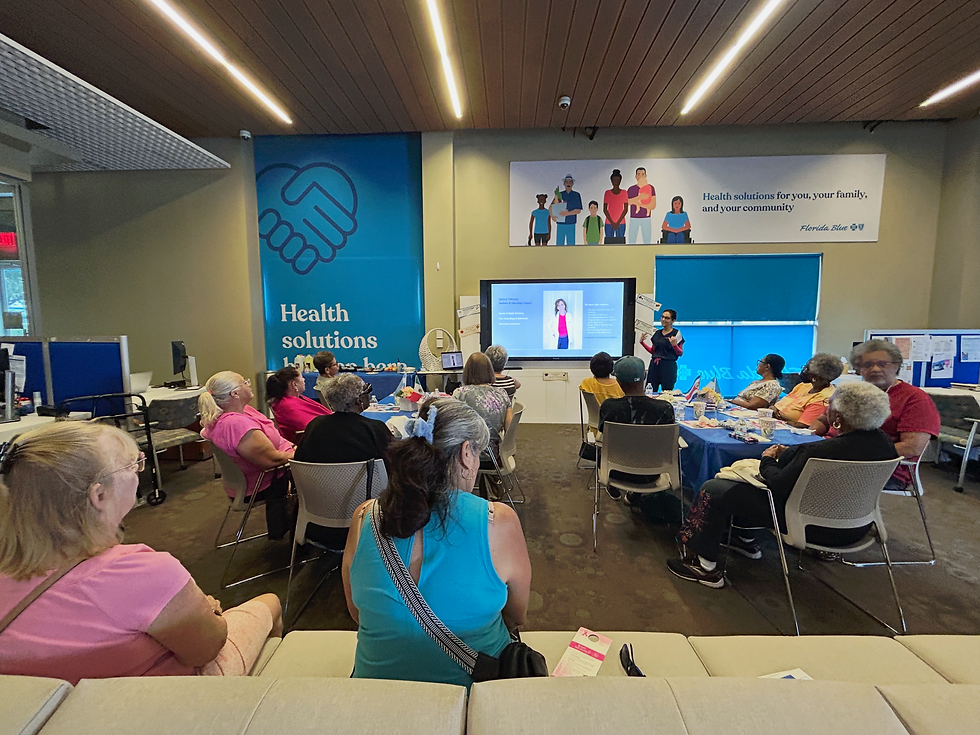
I've had the opportunity to present educational lecture series for cancer survivors and offer monthly mindfulness meditation experiences in collaboration with Florida Blue's Lunch & Learn series in Winter Park.
These gatherings create opportunities for learning, connection, and nervous system nourishment.
I've also founded The Little Dot Project, a complimentary restorative tattoo initiative offering cancer survivors the opportunity to transform small, black radiation alignment tattoos into natural-looking freckles, when appropriate for their skin.
Explore The Little Dot Project →